News
Patient Resource: Learn How Vision After Stroke Impacts Dementia Risk
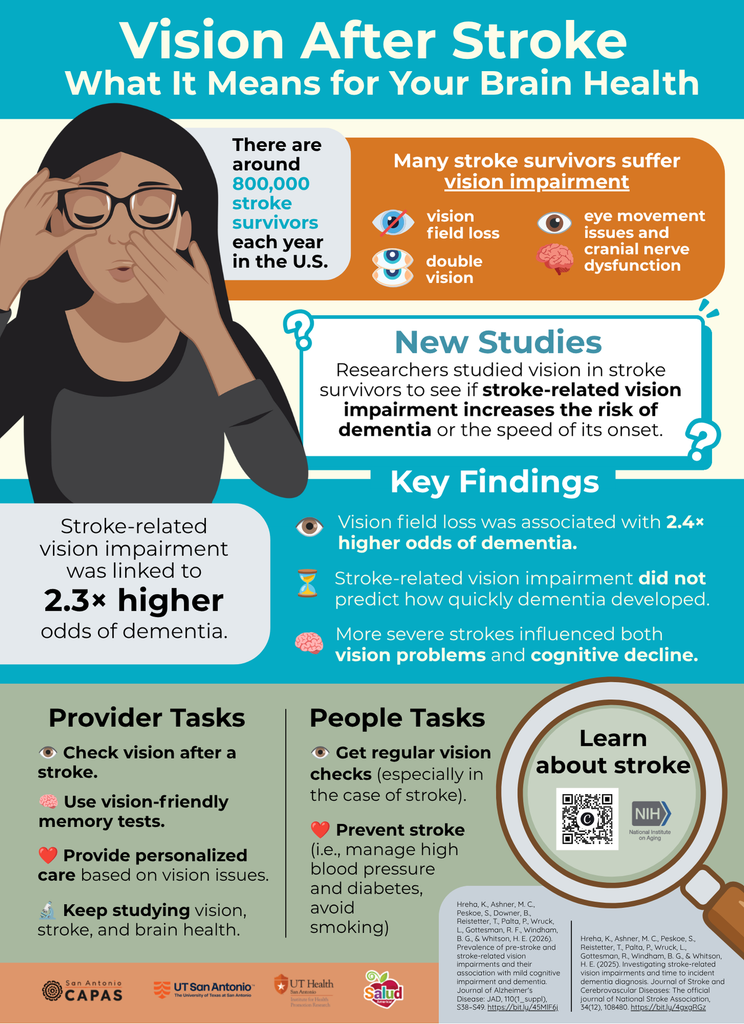
New research highlighted by the San Antonio Center for AD/ADRD Population Aging and Social Studies (CAPAS) suggests that vision problems following a stroke may also have important implications for brain health. Stroke survivors with vision impairment were found to have 2.3 times higher odds of developing dementia compared with stroke survivors who did not experience vision-related issues.
The article explains that vision changes after a stroke can include double vision, loss of part of the visual field, and other neurological vision disorders. Because approximately 65% of stroke survivors experience some form of vision problem, understanding these effects is an important part of long-term recovery and healthy aging.
To help patients, caregivers, and families better understand this connection, CAPAS and UT Health San Antonio developed a fact sheet titled Vision After Stroke: What It Means for Your Brain Health. The resource explores different types of stroke-related vision impairment, their relationship to cognitive decline and dementia risk, and ways healthcare providers and communities can support better outcomes through screening, intervention, and awareness.
Why Read More?
This article raises an important question: could protecting and monitoring vision after a stroke help protect brain health as well? The fact sheet dives deeper into the latest research and offers practical information for stroke survivors, caregivers, healthcare professionals, and advocates. Anyone interested in aging, dementia prevention, or stroke recovery will find valuable insights worth exploring.

