News
Summer 2025 Healthy Brains Together Newsletter

In this issue…
Duke-UNC Alzheimer’s Disease Research Center (ADRC)
Learn about the use of blood tests to diagnose Alzheimer’s disease, how the MIND Diet may help reduce risk, upcoming events, and more. Plus, last call to register for the ADRC Memory & Aging Study Participant Appreciation Event!
Main Story
Latest News on Diagnosing Alzheimer’s with a Blood Test
By Dr. Kathleen Welsh-Bohmer, ORE Core Leader
We are in an exciting time for Alzheimer’s disease (AD) diagnosis and treatment. In the last two years, two new medications—Kisunla and Leqembi—have become available that reduce the amyloid pathology of AD and slow down the progression of the disease. This makes obtaining a reliable diagnosis more important than ever, as these new drug therapies are highly specific to AD pathology and can only be prescribed for patients with elevated levels of amyloid in the brain.
However, getting a reliable diagnosis is sometimes easier said than done. Even when a specialist is available, a patient might need multiple medical visits and undergo specialized tests, such as a lumbar puncture or a type of brain scan called positron emission tomography (PET), to confirm the presence of abnormal brain amyloid. Adding to the challenge, these tests are both expensive and invasive. Many patients may not have the financial resources to cover the costs. Clinicians and families have long hoped for a quicker, less costly way to diagnose AD.
Now, there’s finally some good news: the Food and Drug Administration (FDA) has approved an affordable blood test to help doctors diagnose Alzheimer’s disease.
Event Spotlight
Last Call to Register for the ADRC Participant Appreciation Event
June 28, 2025 | 11AM – 2PM | Hock Plaza, 2424 Erwin Rd., Durham NC
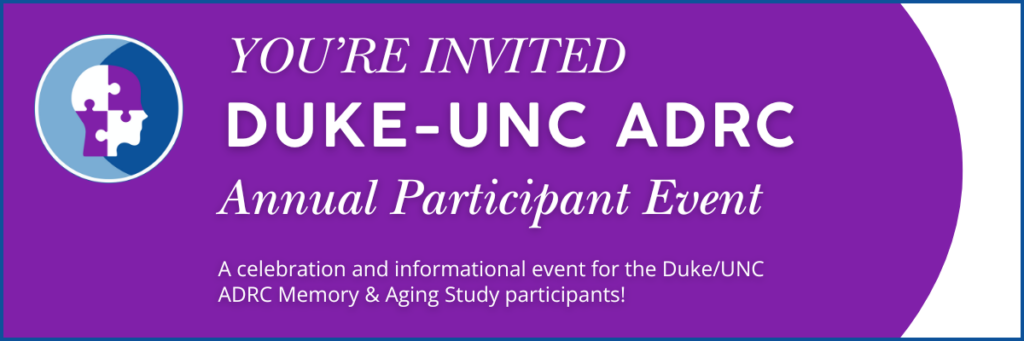
Join us for the Duke-UNC ADRC’s 2nd Annual Study Participant Event
- Lunch will be provided
- Free parking available
- Each participant is welcome to bring one guest
UpdateS in Research
New Study Links the MIND Diet to Reduced Risk of Dementia
As reported in the Medical Life Sciences News, there is new evidence that diet may play an important role in lowering one’s risk of dementia. People who followed a dietary pattern known as the MIND diet were significantly less likely to develop Alzheimer’s disease or related forms of dementia.
The MIND diet, which stands for Mediterranean-DASH Intervention for Neurodegenerative Delay, combines the Mediterranean diet with the blood pressure-lowering DASH (Dietary Approaches to Stop Hypertension) diet and also emphasizes proven brain-healthy foods like leafy green vegetables, berries, nuts and olive oil.
According to the study, the MIND diet had a stronger and more consistent risk reduction relationship with dementia than other healthy diets, although the relationship varied among five racial groups. Those who improved their adherence to the diet the most over time showed the greatest pattern of risk reduction. This beneficial relationship was seen similarly among younger and older groups, suggesting that there are benefits to adopting the diet at any age.
Link Between Loneliness and Dementia
A meta analysis, or method of combining data from multiple independent studies (all funded by the National Institute on Aging), found a strong relationship between reported loneliness and cognitive function. Loneliness had varying impacts with Alzheimer’s risk increasing by 14%, vascular dementia by 17%, and Mild Cognitive Impairment (MCI) by 12%. The distinction between loneliness and social isolation is stressed as not everyone who has few social contacts feels lonely and people who have many social contacts can feel alone.
Brain Health
Every year, the Alzheimer’s Association releases its annual Facts & Figures report, which highlights the impact of Alzheimer’s and dementia on individuals, caregivers, government, and the nation’s health system. This year, the report is accompanied by a Special Report titled American Perspectives on Early Detection of Alzheimer’s Disease in the Era of Treatment. You can download this report to learn more about early detection, test to assist in diagnosis, and treatments.

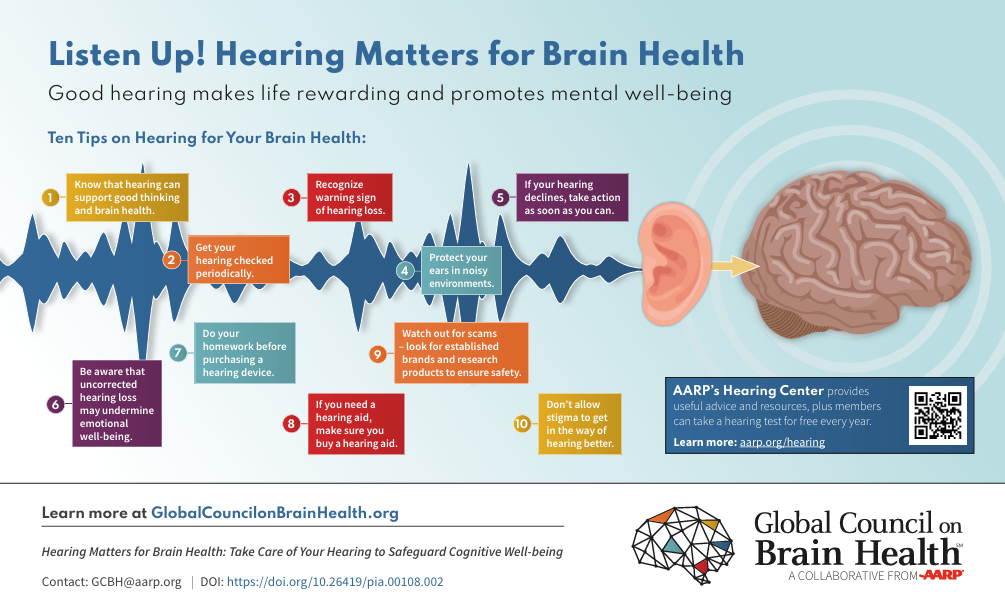
Did you know that Hearing Loss is one of the Most Treatable Risk Factors for Dementia?
A special report from AARP’s Global Council on Brain Health provides more information about what you can do and why it may help.
upcoming Events
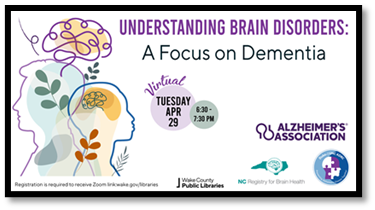
The Empowered Dementia Caregiver: Supporting Independence
June 17, 2025 | 6:30PM Eastern Time | Virtual
This free seminar is sponsored by the NC Registry for Brain Health, the Alzheimer’s Association, and Wake County Public Libraries. Join us in exploring ways to support people living with dementia while balancing safety and independence. Learn how to provide the right amount of support and gain tips to make every activity meaningful to the person living with dementia. The event is free, but registration is required
Residential Long-Term Care Options for Loved Ones with Dementia
August 13, 2025 | 1:00PM Eastern Time | Virtual
Caryn Utberg, Senior Living Specialist from All About Seniors
Duke Dementia Family Support Program partners with experts in the fields of caregiving and dementia to offer the Caregiver Connections webinar series. If you cannot attend the live event, webinars are recorded and links added to the Caregiver Connections webpage after the webinar has concluded. No registration necessary!
Join Zoom Meeting
https://duke.zoom.us/j/96577471018?pwd=RXNxdlNGV3ZlbUZydU1YcmlGYWg1QT09
Meeting ID: 965 7747 1018; Passcode: 3513
To join by phone, dial 1-301-715-8592 and you will be asked to enter the meeting id and passcode.
Staff Spotlight

Meet Indira Lujano, Clinical Research Coordinator at UNC
Indira joined the UNC Alzheimer’s Disease Research Center (ADRC) in 2023 after graduating from UNC-Chapel Hill where she focused on global studies and neuroscience. As a Clinical Research Coordinator, she spends most of her time working on the CLARiTI study.
When asked what she likes about her job, she says, “I love that I get to connect with people from different backgrounds and ethnicities as we share the same enthusiasm for research and innovation.”
Indira is especially passionate about brain health and is dedicated to creatively sharing information about disease prevention, particularly in low-income communities. In her free time, she enjoys listening to podcasts and watching sunsets.
Listening Corner
Dementia Untangled
Dementia Untangled, a podcast of Banner Health, explores topics related to dementia through conversations with physicians, experts and community leaders focusing on innovative ideas, practical strategies and proven methods to create a supportive path for caregivers.
In this moving and insightful episode, the host sits down with Dr. Rebecca Chopp—renowned author, former university president, activist, and theologian—who is now navigating life with Alzheimer’s disease. Dr. Chopp shares how she continues to nurture her spirit on the dementia journey, using spiritual practices, theological insight, and a deep commitment to living with presence and purpose. Access this episode by clicking on the episode above or in the places you find podcasts.
This podcast helps the listener stay informed on the latest advancements in Alzheimer’s research and caregiving. Creator and host Dr. Nathaniel Chin, part of the University of Wisconsin ADRC, regularly interviews leading scientists and caregiving experts to bring listeners the latest in Alzheimer’s disease news, research and caregiver resources.
Family Ties: How Family History Affect Alzheimer’s Risk
How important is one’s family history when determining Alzheimer’s risk? Returning guests Drs. Jessica Langbaum and Sterling Johnson discuss the latest research on family history and genetic risk factors and share their perspectives on the topic, specifically focusing on the role of the APOE gene as a risk factor. Access this episode in the places you find podcasts or from their website.
Access all Dementia Matters episodes in the places you find podcasts or from their website: Dementia Matters!

