If you’re looking for gift ideas for a family member with dementia during the holiday season, the Duke Dementia Family Support Program has compiled some thoughtful suggestions for you.
2024 Gift Ideas for a Loved One with DementiaNews
Winter 2024 Healthy Brains Together Newsletter
Share:

In this issue…
Duke-UNC Alzheimer’s Disease Research Center (ADRC)
Welcome to the Duke/UNC ADRC Community! We’re thrilled to share the latest updates in our mission to advance Alzheimer’s research. In this issue, we answer the question, “What is an ADRC, and why do we need one?” You’ll also find highlights from a busy fall, thoughtful gift ideas for the holiday season tailored for people living with dementia and their caregivers, and more!
Main Story
A Busy Fall for the Duke/UNC ADRC
This season, the Duke/UNC ADRC has been actively engaged in impactful activities and meaningful collaborations. Below, the Outreach Recruitment and Engagement Core shares some key highlights:
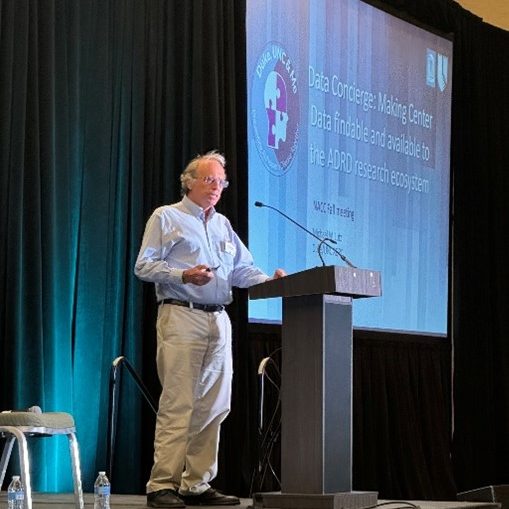
Boston, MA October 15 – 17
The ADRC National Alzheimer’s Coordinating Center (NACC) Meeting and Introduction of the CLARiTI Study
A key highlight of this semi-annual meeting was the introduction of the CLARiTI study, which uses advanced imaging like PET and MRI scans to improve Alzheimer’s research, especially in diverse populations. The five-year study, which launched participant brain scanning in August 2024, involves 37 National Institutes of Health-funded Alzheimer’s Disease Research Centers across the United States. Researchers will gather data correlated with presence, absence or changes in characteristic disease biomarkers in people who have dementia or are at risk of developing it. The study is also intended to allow a better understanding of mixed dementia, which is a situation in which more than one neurological disease contributes to dementia, according to Sterling Johnson, study leader and professor of medicine at the UW School of Medicine and Public Health. We will continue to introduce CLARiTI to Memory & Aging study participants so stay tuned for details. The NACC meeting also reinforced the importance of reaching underrepresented groups and building trust to enhance participation in programs like autopsy studies. The meeting also emphasized the importance of partnerships between outreach, clinical and data management components of an ADRC in order to make data-sharing easier while keeping participant information secure.
Madrid, Spain October 29 – November 1st
The Clinical Trials in Alzheimer’s Disease Conference (CTAD)
Scientists shared exciting updates from over 127 ongoing clinical trials targeting Alzheimer’s disease and other dementias. Remarkable progress has been made in blood tests (biomarkers) that can detect Alzheimer’s earlier and more accurately. Using blood tests to detect the diseases that cause dementia at an early stage is one of the fastest growing and most promising areas of dementia research. One blood test – which detects a protein in the blood called p-tau217 – was presented by multiple research groups as the most accurate blood-based indicator – or “biomarker” – of Alzheimer’s disease we have so far. Researchers are now testing how these tools and new treatments work in patients from different backgrounds.
Examples of positive clinical trial results included a presentation by Roche of their next-generation anti-amyloid therapy trontinemab, which is designed to get past the blood-brain barrier more easily than existing anti-amyloid drugs such as lecanemab, meaning treatment requires lower doses and therefore reduced likelihood of side effects. Another company, Vaxxinex, presented data on pepinemab, which is an infusion antibody that binds to a protein found on astrocytes, the brain’s supportive cells, to boost brain metabolism and prevent cell death. This was a small (50-participant), year-long early-stage trial for treatment of mild Alzheimer’s. The drug was safe and well-tolerated, and it showed signs of slowed cell death and improved brain metabolism.
For a more complete list of clinical trials that announced results, check out: https://www.beingpatient.com/what-happened-at-ctad-2024/
Durham, November 2nd
Black Men’s Healthy Symposium
We hosted our inaugural Black Men’s Health Symposium, which explored topics like cardiovascular health, masculinity and Alzheimer’s disease in Black men. Talks by Dr. Christopher L. Edwards (NCCU), Dr. Kevin Thomas (Duke), and our new ORE Co-Lead, Dr. Robert Turner II emphasized the importance of understanding how these factors influence dementia risk. The event strengthened community ties and set the stage for next year’s gathering.

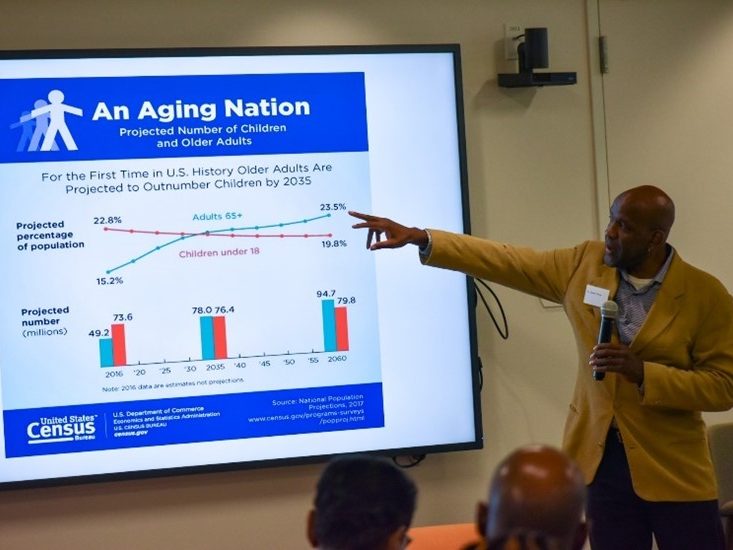
Seattle, November 12 – 16
Gerontological Society of America (GSA) Scientific Sessions: The Fortitude Factor
This meeting provided a valuable opportunity for Duke-UNC ADRC members and collaborators to showcase their diverse aging research. Dr. Marianne Chanti-Ketterl, ORE Core Co-Lead, shared strategies for involving Hispanic and Indigenous communities in brain health studies, including a collaboration with UNC-Pembroke (UNCP) and the Lumbee Tribe to use mobile clinics that bring care directly to people in the community. Other presentations including those of Dr. T. Shuo Han, a Duke Biochemist, exploring how gut bacteria and diet influence longevity and Dr. Louise McCullough who presented findings on how the microbiome impact cognitive decline and immune function in aging.
What Is An ADRC?
Are you wondering what an Alzheimer’s disease research center (ADRC) is and does?
The Duke-UNC ADRC is one of 35 centers across the United States. These ADRCs are funded by the National Institute on Aging (NIA), part of the National Institutes of Health (NIH). They provide resources, support, and opportunities for individuals to participate in research on Alzheimer’s disease and related dementias (ADRD). Designated as centers of excellence, ADRCs lead the way in advancing ADRD research, fostering collaboration, and sharing innovative ideas and findings across the network. This collective effort has yielded groundbreaking discoveries and resources to better understand, diagnose, treat, and prevent dementia while enhancing care for individuals and families affected by Alzheimer’s disease and related dementias.
A few recent examples of shared innovations coming out of ADRCs:
Find out more about ADRCs across the country here!
Community Spotlights
Gift Ideas for a Loved One with Dementia
The Duke Dementia Family Support Program
The Duke Dementia Family Support Program offers education, support and engagement for people living with dementia and their families.
Duke Dementia Family Support ProgramUpdates in Research
Dr. Robert Turner Joins the ADRC

Dr. Robert Turner II joined the Duke faculty this fall, and is part of the leadership team of the Duke/UNC ADRC Outreach, Recruitment, & Engagement Core. Dr. Turner is a former professional football player, sociologist, and brain health researcher. He leads national efforts to promote brain health awareness and research participation, particularly among athletes and Black men.
Dr. Turner’s perspectives have been shaped by personal experience as a caregiver as well as an athlete and a researcher. In May of this year he and his father were featured in this NPR story about Alzheimer’s caregiving among Black men.
Dr. Turner is the PI of an RO1-funded study that examines the link between traumatic brain injury and cognitive outcomes in Black men.
NIH Releases 2024 Progress Report
2024 has been a year of fast-paced progress in Alzheimer’s research. This progress helps move us closer to developing effective prevention and treatment options that benefit all Americans. The 2024 NIH Alzheimer’s and Related Dementias Research Progress Report: Advances and Achievements features recent science advances and related efforts in areas including drug development, behavioral and lifestyle interventions, cognitive assessments and biomarkers, dementia risk and protective factors, disease mechanisms, care and caregiving research, career training, and more.
Dr. Heather Whitson is quoted in AARP’s 15 Warning Signs of Dementia You Shouldn’t Ignore
AARP Dementia Warning Signs
Brain Health

Listening Corner
A Season of Care: Holiday Tips for Dementia Caregivers
The Alzheimer’s Association New England Region’s Speaking of Alzheimer’s podcast is hosted by Kristen Cusato and focuses on firsthand experiences from individuals navigating their journey with dementia, insights from dedicated care partners and illuminating discussions with researchers. The most recent episode is called A Season of Care: Holiday Tips for Dementia Caregivers.
Access it in the places you find podcasts or from their website.
Community Events
Wake County Public Library
Understanding Brain Health and Research
Join us this year to explore strategies to enhance cognitive function, reduce dementia risk, and improve overall brain health.
Resources for Seniors
Caregiver Educational Program 2025
Learn how to handle stress, improve self-confidence, communicate better, improve your ability to make tough decisions, locate helpful resources and more.
Nov
12
Nov
18
Dec
09
Caregiver Connections – Serious Illness Care Support Options for People with Dementia
General
1:00pm
View Event

