August 20, 2026Rachel Dewees, MSW & Lindsey Womack
Share:
In this issue…
Duke-UNC Alzheimer’s Disease Research Center (ADRC) Quarterly: Research, Events, and Community
In this issue you will find Duke UNC ADRC impressions from the Alzheimer’s Association International Conference in London, UK, interesting staff/trainee features, research updates, fall events and more.
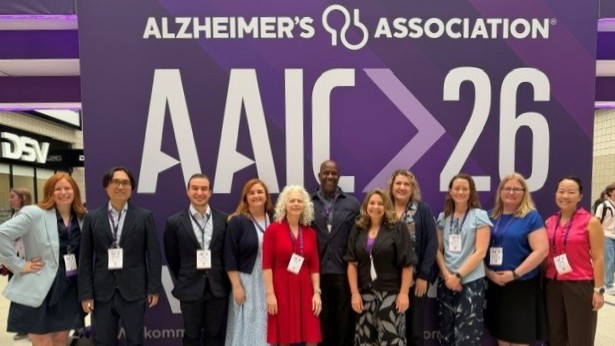
Duke-UNC ADRC team at AAIC 2026 in London, United Kingdom
This July, the world’s dementia research community gathered in London for the Alzheimer’s Association International Conference (AAIC) 2026, and the Duke-UNC Alzheimer’s Disease Research Center was there in force, sharing new science, building collaborations, and helping set the agenda for the field’s next chapter.
AAIC is the Alzheimer’s Association’s flagship annual conference and one of the largest international gatherings dedicated to Alzheimer’s disease and related dementias. More than 13,000 researchers, clinicians, care professionals, advocates, and industry leaders convened in person and online this year, July 12-15, at ExCeL London. The conference brings together plenary sessions from leading scientists, interactive “ASK!” Q&A sessions on drug discovery and biomarkers, Featured Research Sessions spanning genetics and clinical trial design, and Clinical Toolbox and Perspectives sessions focused on real-world care delivery.
Two staff on the Duke team and an unconventional path for a UNC postdoc.
Duke Team member Cierra Williams-Cooke
Cierra joined the ADRC team in 2025. Originally from Hampton, Virginia, she holds a Master’s degree in Psychological Sciences from James Madison University. Cierra has worked in Alzheimer’s disease research since her early career beginning at the University of Kansas Medical Center and specializes in clinical trials and regulatory compliance. In her free time, Cierra enjoys baking, cooking, and spending time with her son, Isaiah. Ask her about the new recipes she’s been trying!
Duke Team member Lilyanne Beaver
Lilyanne joined the Duke Memory & Aging study team in June. She is especially excited to work in a space that brings together two of her passions—scientific research and community—and to contribute to research on something as universal as aging. Her background includes a master’s degree in biology from NC State and research on female chimpanzee diet during pregnancy and the neuroscience of aging during the menopause transition in monkeys. Originally from Florida, with a stint in New Orleans, she has called North Carolina home for about five years. Outside of study visits, she volunteers at the LGBT Center in Raleigh, where she hosts book clubs, and enjoys reading, movies, television, pop music, tennis, stamp carving, and attending Carolina Courage and Durham Bulls games.
UNC Postdoc Ryan Weeks
Dr. Ryan Weeks
Ryan Weeks is a postdoctoral researcher at UNC whose path to neurodegenerative research has been anything but traditional. After earning a degree in animal science from NC State, Ryan spent 30 years as a farmer and business owner before returning to school and beginning a second career in biomedical research. Today, he studies neurodegenerative diseases in the lab of Dr. Todd Cohen, using zebrafish and mouse models to explore mechanisms involved in ALS, frontotemporal dementia, and Alzheimer’s disease. Originally from Dunn, Ryan has called Chapel Hill home for nearly a decade. Outside the lab, he enjoys music, reading, strength training, and spending time with his wife and three children.
Read more about Ryan’s unconventional journey to becoming a scientist and the experiences that continue to shape his work. Read more about Ryan’s journey via the button below!
Clinical Practice Outcomes with Lecanemab for Alzheimer Disease
What happens when a new Alzheimer’s treatment moves from clinical trials into everyday care? ADRC researchers including Dr. Andy Liu examined the experiences of 230 patients receiving lecanemab, looking closely at safety, MRI monitoring, and changes in cognition. The study found that a potential side effect called ARIA (Amyloid Related Imaging Abnormalities) occurred in about one-quarter of patients, with higher risk among people with two copies of the APOE ε4 gene. Importantly, patients who experienced ARIA did not show greater cognitive decline over the 12 months studied. These findings provide valuable real-world insight into the benefits, risks, and ongoing monitoring needed as lecanemab becomes part of Alzheimer’s care.
Avoiding these 3 Risk Factors Might Delay Onset of Dementia by Years
Could changing a few everyday health factors help us spend more years of our lives free from dementia? Research suggests that it may be possible. This article highlights three modifiable risk factors (high blood pressure, diabetes and smoking in midlife) that have been linked to a substantially longer period of time without dementia—potentially as much as 13 additional years. ADRC Co-Leader Dr. Heather Whitson is quoted in the article, offering her perspective on what these findings mean and why they matter. While preventing dementia is not currently possible, the findings offer an encouraging reminder that what we do throughout our lives may influence brain health later on.
Could gait speed be connected to how our brains age? New research suggests that people who maintain a faster walking pace may experience less cognitive decline over time. Duke researcher and Geriatrics Division Chief Dr. Cathleen Colon-Emeric is quoted in the article, offering her perspective on what these findings may mean for brain health and aging. Gait speed is one of the age related variables measured in the Memory and Aging Study, making this research especially relevant to the work happening right here at Duke. The findings add to growing evidence that movement and physical activity are important not only for our physical health, but for brain health as well. Read the article to learn more about the “super-movers” and what their walking pace may tell us about healthy brain aging.
Shine Your Light: Art Created by People Living with Dementia
September 3, 2026 | 6:30 PM - 8:30 PM EST
The ArtsCenter, Carrboro NC
Join us for our opening reception on Thursday, September 3 from 6:30-8:30pm, where local organizations who support people living with dementia and their caregivers will be onsite to share resources. On view in our Green Room Hall Gallery from September 3-October 2.
SEP
09
Community Event
Duke Caregiver Community Event
September 9 & 10, 2026 | 8:30 AM - 4:30 PM EST
Sheraton Imperial Hotel, Research Triangle Park
Connect with caregiving experts, learn about resources,
and discover support services designed to help families
navigating dementia and memory-related conditions.
Caregiver Connections - Hosted by the Duke Dementia Family Support Program
An Overview of LATE
September 29, 2026 | 2:00 PM EST
Virtual Program
Speaker: Milta Little, DO, CMD. Learn about Limbic-predominant TDP-43 Encephalopathy (LATE),
a common Alzheimer's disease mimic in older adults, and
current approaches to diagnosis and management.
October 14, 2026 | 1:00 PM EST
The Road Ahead: A Discussion about Comprehensive Driving Evaluations Presenter: Melissa Werz, OTD, OTR/L
November 18, 2026 | 2:00 PM EST
Understanding the Process and Eligibility for Special Assistance for Adult Care Homes in NC Presenter: Valerie Williams, MS, CPM
December 9, 2026 | 1:00 PM EST
Serious Illness Care Support Options for People with Dementia Presenter: Betsy Barton, MPH, CT
OCT
03
Sponsored Event
Walk to End Alzheimer's
October 3, 2026 | Registration at 9:00AM EST
Halifax Mall | 300 N. Salisbury Street Raleigh, NC 27603
Join the Duke-UNC ADRC Team the Blue Walkers! Team Captain: Rachel Dewees
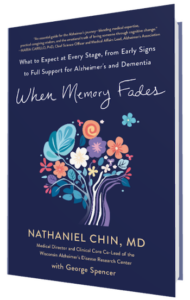
When Memory Fades: What to Expect at Every Stage, from Early Signs to Full Support for Alzheimer's and Dementia, written by Dr. Nathaniel Chin, Medical Director and Clinical Core Co-Lead of the Wisconsin Alzheimer's Disease Research Center.
What to Expect at Every Stage, from Early Signs to Full Support for Alzheimer's and Dementia
By Dr. Nate Chin, geriatrician and family caregiver to his father with dementia
Check out the Duke Dementia Family Support Program's review of this book. They give it two thumbs up!
Companion Cards – a simple tool that can make a difference
These cards are an effective way for care partners to quietly let others know their loved one has dementia and may have language difficulties or exhibit unexpected behaviors. Use these cards in public – hand to waitstaff, store employees, law enforcement officers, etc. – to avoid frustration and preserve your family member’s dignity.
Download and print companion cards from the Duke Dementia Family Support Program