
Agenda
Symposium for Learning about Alzheimer’s Disease-related Medical Research at Duke & UNC
May 15, 2026
Friday Conference Center
Chapel Hill, North Carolina
Explore this section
Welcome
The Duke/UNC ADRC REC Core’s annual symposium, SLAM-DUNC, brings together researchers, clinicians, and trainees at all levels. First held in 2022, the event fosters cross-institution collaboration, showcases trainee and early-stage investigator research, highlights advances in AD/ADRD research and care, and promotes ADRC resources and training opportunities.
Agenda
| 8:30AM | Check-In with Continental Breakfast |
| 9:30AM – 10:15AM | REC Scholar Presentations Dr. Miles Bryan “In Vivo Imaging of Brain Uptake and Pharmacokinetics of Tau Immunotherapies” Dr. Melissa Walsh “Mapping Menopause-Related Synaptic Vulnerability: A Pilot SV2A-PET Study” |
| 10:15AM – 11:15AM | Keynote Speaker: Dr. Timothy Hughes, Wake Forest “Targeting the vascular contribution to dementia” |
| 11:15AM – 12:15PM | Poster Session 1 |
| 12:15PM – 1PM | Lunch |
| 1PM – 1:30PM | Research Spotlight: Dr. Mohanish Deshmukh, UNC “Loss of Brain Resilience in AD: Focus on miR-29” |
| 1:30PM – 2:15PM | Accelerated Research Talks Dr. Todd Cohen “Environmental risk factors that drive brain pathology and neurodegeneration” Dr. Priya Palta “24-Hour Movement Behaviors and Cognitive Function in the MESA 24H-ACT Study” Dr. Trong-Kha Truong “Predicting Risk of Impending Cognitive Decline in Asymptomatic Individuals with Early Alzheimer’s Disease: Insights from Cortical Diffusion MRI” |
| 2:15PM – 2:25PM | Break |
| 2:25PM – 3:25PM | Poster Session 2 |
| 3:25PM – 3:45PM | Clinical Insights & ADRC Data Review Drs. Heidi Roth & Kim Johnson, Core Leaders of the Clinical Core Dr. Patrick Smith, Neuropsychologist at UNC-CH |
| 3:45PM – 4:30PM | ADRC Cycle 1 Retrospective Review Outreach, Recruitment & Engagement Core, Dr. Andrea Bozoki Data Management & Statistics Core, Dr. Sheng Luo Neuropathology Core, Dr. Jerry Wang Biomarker Core, Dr. Andy Liu |
| 4:30PM – 4:45PM | Poster Awards & Closing Remarks |
Keynote Speaker
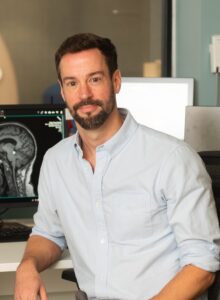
Timothy Hughes, PhD
Associate Professor of Internal Medicine, Epidemiology and Prevention, Wake Forest University School of Medicine
Dr. Timothy Hughes is currently an Associate Professor in the Department of Internal Medicine at Wake Forest University School of Medicine. He is a neuroepidemiolgist cross-trained in cardiovascular epidemiology, aging, Alzheimer’s disease, and multimodal brain imaging at the University of Pittsburgh and Wake Forest University School of Medicine. His research focuses on untangling the relationships vascular and metabolic disorders have with Alzheimer’s disease and related dementias. He has published scientific papers and presented both nationally and internationally on topics related to the vascular contributions to Alzheimer’s disease.
He served on the National Advisory Neurological Disorders and Stroke (NANDS) Council the results of the Alzheimer’s Disease‐Related Dementias (ADRD) Summit in 2022. He currently serves on the Executive Committees for the Wake Forest Alzheimer’s Disease Research Center and the Vascular Cognitive Disorders Professional Interest Area of the Alzheimer’s Association International Society to Advance Alzheimer’s Research and Treatment.
He is currently principal investigator of several large NIH funded observation studies (ARIC and MESA) and clinical trials focused on the vascular contributions to Alzheimer’s disease and related dementias. The goal of this research is to understand the structural, functional, and molecular connections vascular disorders have with brain health as a means to find new treatments and prevention strategies for dementia.
Research Spotlight

Mohanish Deshmukh, PhD
William R. Kenan, Jr. Distinguished Professor, Cell Biology and Physiology, Neuroscience Center, Co-Director MD/PhD Program, University of North Carolina at Chapel Hill
Mohanish Deshmukh, Ph.D. is a William R. Kenan, Jr. Distinguished Professor of Cell Biology & Physiology and the Neuroscience Center at the University of North Carolina, Chapel Hill. Mohanish received his PhD from Carnegie Mellon University, conducted his postdoctoral research at Washington University and joined UNC as an Assistant Professor in 2000.
Mohanish’s lab studies the mechanisms by which neurons survive and die.
His lab also focuses on understanding neurodevelopmental disorders as well as developing therapeutic strategies for preventing neurodegeneration in Alzheimer’s disease.
Mohanish received the Burroughs-Wellcome New Investigator Award in 2001. At UNC, Mohanish was recognized with the Teaching Excellence Award and the Mentor of the Year Award. He has been the Co-Director of the UNC MD/PhD program for the past 10 years.
Accelerated Research Talks
Todd Cohen, PhD
Associate Professor of Neurology and Neuroscience, University of North Carolina at Chapel Hill
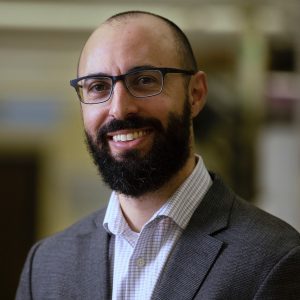
Dr. Todd Cohen is an Associate Professor in the Department of Neurology and Neuroscience Center at UNC-Chapel Hill. He received his Ph.D. from Duke University and held a postdoctoral position at the University of Pennsylvania where he studied why neurons degenerate in Alzheimer’s disease, while also focusing on related forms of dementia including frontotemporal dementia (FTD). He now has an independent research laboratory at UNC-Chapel Hill where his lab studies the normal aging brain, what goes wrong in diseases like Alzheimer’s disease, what goes wrong in motor neuron diseases like amyotrophic lateral sclerosis (ALS), and what we can do to prevent the degeneration. Although many of these brain disorders on the surface appear to be clinically different from each other, they actually have much more in common than anyone expected, and Dr. Cohen is fleshing out these similarities and differences. One thing that many neurodegenerative diseases have in common is something called “proteostasis defects” which is the inability to deal with toxic proteins that slowly accumulate in our brains over decades. Dr. Cohen is the recipient of many grants and awards including funding from the Alzheimer’s Association, American Federation of Aging, Muscular Dystrophy Association (MDA), CurePSP, and several multi-institutional collaborative NIH grants.
“We’re making unbelievable progress in understanding the factors, both genetic and more
recently environmental, that impact neurodegenerative diseases. I’m hopeful that once we
can recreate these disease patterns in the lab, we will be able to develop and test new
therapies that haven’t even been considered before.
Priya Palta, MHS, PhD
Associate Professor of Neurology, University of North Carolina at Chapel Hill
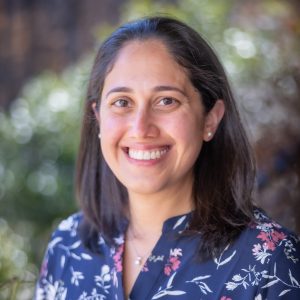
Priya Palta is an Associate Professor of Neurology in the Department of Neurology at the University of North Carolina at Chapel Hill. She is a chronic disease and aging epidemiologist with a multidisciplinary research portfolio at the intersection of cardiovascular disease, aging, physical function/frailty, cognitive decline, and dementia. She is the principal investigator of multiple NIH funded epidemiologic studies that examine the role of vascular-related and modifiable risk factors on cognitive function, cognitive decline, and dementia. She received her M.H.S. and Ph.D. in epidemiology from the Johns Hopkins Bloomberg School of Public Health and completed a postdoctoral fellowship in cardiovascular disease epidemiology at the University of North Carolina at Chapel Hill.
Trong-Kha Truong, PhD
Associate Professor of Radiology, Duke University
Trong-Kha Truong is an Associate Professor of Radiology in the Brain Imaging and Analysis Center at Duke University. His research involves the development of novel MRI acquisition and analysis methods for high-resolution diffusion MRI to investigate the microstructure of the human brain and to detect early neurodegeneration in Alzheimer’s disease.
He also co-leads the MR Engineering Lab, which focuses on the development of novel MRI coil technologies.
REC Scholar Presentations
Miles Bryan, PhD

Miles earned his B.S. in Marine Biology from the University of North Carolina Wilmington and later conducted post-baccalaureate research at Duke University studying iron-related diseases. He completed his Ph.D. at Vanderbilt University investigating cellular stress pathways in Huntington’s disease before joining the laboratory of Todd Cohen at University of North Carolina at Chapel Hill in 2020, where he is currently a Research Associate. His current research focuses on the role of tau post-translational modifications in Alzheimer’s disease, with an emphasis on developing engineered antibodies, gene therapies, and CRISPR-based approaches to promote clearance of toxic tau species and identify novel regulators of tau pathology. He has received fellowship support from the National Institute of Environmental Health Sciences and the National Institute on Aging and is currently supported by the Department of Defense Alzheimer’s Research Program.
Melissa Walsh, PhD

Melissa J. M. Walsh is a research instructor in the Department of Psychiatry at the University of North Carolina at Chapel Hill. She holds a doctoral degree in auditory and language neuroscience from Arizona State University. Her research expertise is in neuroimaging, reproductive neuroendocrinology and cognitive aging. Walsh’s National Research Service Award-sponsored doctoral training focused on multimodal and multivariate neuroimaging approaches to study cognitive aging in autism. As a postdoctoral fellow in the Training Program for Reproductive Mood Disorders, her work has focused on how reproductive hormones impact brain structure, connectivity and molecular function. Through this training, she has gained expertise in menopause research, neuroendocrinology and PET-MR neuroimaging. Her current research interests focus on understanding how the brain adapts to menopause and mechanisms supporting cognitive vulnerability and resilience. Her research integrates multimodal and molecular neuroimaging techniques such as synaptic density imaging with experimental studies of hormone administration and longitudinal studies of natural menopause. She is leading projects studying the menopause transition and links to cognition and brain aging, including an investigation of synaptic density and neuroactive steroids. Her goal is to advance sex-specific models of brain aging and inform strategies to promote cognitive health in women.
Poster Abstracts
Directory of Abstracts for the Poster Sessions
Parking
Complimentary parking is available at the Friday Conference Center. You will need to display a copy of the event parking pass.
Additional physical copies will be available on the day of the event as well.
REC Educational Partners


